
-
Are you the same Bilstein that makes B4 rear shock absorbers and B4 struts?
-
What should B2B buyers actually source from a multi-process metal parts supplier?
-
How do you calculate TCO when comparing automotive metal part suppliers?
-
My car has no turn signal. What should I check first?
-
Water heater drain pump: is that related to automotive parts?
-
How long does it take an alternator to charge a battery?
-
When should a B2B buyer not choose a multi-process supplier like us?
-
What quality documents should you require before production?
I'm a procurement manager at a 240-person automotive components company. I've managed a $2.8 million annual metal parts budget for 7 years, negotiated with 60+ vendors, and documented every order in our cost tracking system. This FAQ is for people who land here searching for very different things: Bilstein B4 rear shock absorbers, no turn signal fixes, water heater drain pumps, and alternator charging times. Let me separate the search intents and answer what I can—and say clearly when we're not the right fit.
Are you the same Bilstein that makes B4 rear shock absorbers and B4 struts?
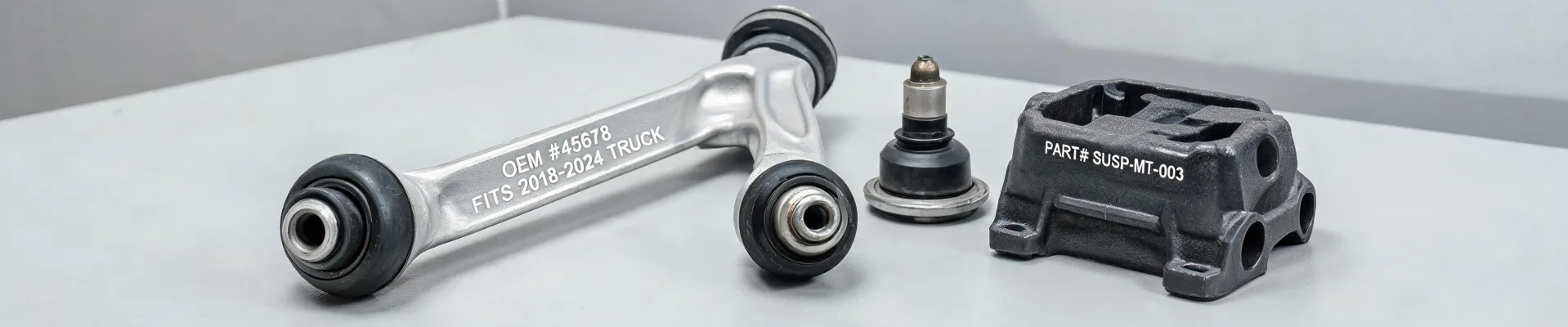
No. If you're looking for Bilstein B4 rear shock absorbers or Bilstein B4 struts, you're looking for suspension products from Bilstein GmbH. We're a different bilstein: a B2B automotive metal parts manufacturer. We make stamping parts, stamping dies, CNC machined parts, forging parts, and aluminum extrusions. We don't sell consumer shock absorbers, and I wouldn't pretend otherwise just to capture a search term. That kind of mismatch creates returns, chargebacks, and wasted time for both sides.
What should B2B buyers actually source from a multi-process metal parts supplier?
If your drawing involves progressive dies, stamped brackets, CNC-turned bushings, forged suspension links, or aluminum extruded profiles, we're in the right conversation. In 2023, I audited $180,000 of cumulative spending across 6 years and found that 38% of our overruns came from splitting one part family across too many vendors. Multi-process manufacturing and in-house tooling reduce that handoff risk. But it only works when your annual volume justifies tooling amortization. For low-volume prototype work, a job shop may be cheaper.
How do you calculate TCO when comparing automotive metal part suppliers?
Look, I don't compare unit price. I do not care what the quote says if the total is wrong. I compare landed cost plus tooling, PPAP documentation, freight, inspection, and switching cost. In Q2 2024, Vendor A quoted $4.20 per stamped part; Vendor B quoted $3.85. B looked better until I added $2,800 for a new die, $600 for PPAP rework, and $450 in expedited freight. On 12,000 annual units, B was actually $0.07 more per part. According to AIAG PPAP 4th edition, production part approval is not free paperwork—it's a real cost line. If a quote ignores it, the quote isn't complete.
My car has no turn signal. What should I check first?
I can only speak as a buyer, not a mechanic. But the usual order is bulbs, fuses, flasher relay, turn signal switch, and grounds. If only one side fails, it's often a bulb or socket. If both sides fail, I'd check the flasher relay and fuse first. A bad alternator can cause strange electrical symptoms, but no turn signal alone usually isn't the first sign. If you're not comfortable testing circuits, pay a diagnostic tech. A $120 diagnosis beats replacing a $200 switch by guesswork.
Water heater drain pump: is that related to automotive parts?
Not directly. A water heater drain pump is a plumbing or HVAC component, not an automotive stamping, CNC, forging, or extrusion. If you're sourcing one for a building system, match voltage, flow rate, discharge head, and connection size before price. If you're a Tier 1 automotive supplier looking at a pump bracket or motor housing, that's different—that's the kind of stamped or CNC part we quote. Context matters. This worked for us in automotive, but our situation was predictable annual volumes. If you're dealing with emergency plumbing replacement, a local distributor will beat any overseas metal parts supplier on lead time.
How long does it take an alternator to charge a battery?
It depends on alternator output, battery size, state of charge, and electrical load. A common rule of thumb is 30–60 minutes of driving for a partially discharged battery, but a deeply discharged battery can take hours or require a charger. At idle, charging is slower. If your battery is below 50% state of charge, don't rely on a short drive. According to basic alternator testing practice, you should verify charging voltage at the battery—typically around 13.5–14.5 volts with the engine running. If it's lower, test the alternator and belt. I can't give a guaranteed time because your setup isn't my setup.
When should a B2B buyer not choose a multi-process supplier like us?
If you need 50 pieces, no PPAP, and a two-week turnaround, we're probably not your best fit. If you need consumer shock absorbers branded Bilstein B4, we're definitely not. If your part is a simple weldment and you already have a reliable local fabricator, switching may not pay back. Honest limitation beats hard selling. It took me 3 years and about 150 orders to understand that the 'best' vendor is highly context-dependent. We're strongest when you need one supplier for stamping, CNC, forging, and extrusion with in-house tooling and documented quality. If that's not your situation, I'd rather tell you now.
What quality documents should you require before production?
At minimum: ISO 9001:2015 certificate, IATF 16949:2016 where applicable, control plan, PFMEA, PPAP level 3 for automotive production, material certs, and dimensional layout. For stamping dies, ask for tryout reports and first-article inspection. For CNC, ask for CMM reports. For forging, ask for heat lot traceability. For extrusion, ask for alloy and temper certs. These aren't guarantees of zero defects—no honest supplier guarantees that. They are the paper trail that makes problems findable and fixable. If a supplier can't provide them, price doesn't matter.

Elise Novak
Elise Novak is an automotive braking systems analyst specializing in brake pads, discs, rotors, calipers, shoes, drums, hoses, and complete brake kits. She uses UN Regulation 90 requirements and ISO 26867 dynamometer methods to examine friction stability, fade and recovery, wear, disc thickness variation, runout, and hydraulic integrity. Her work helps distributors, quality teams, and fleet buyers compare replacement parts, verify application suitability, and define incoming-inspection criteria.
Leave a sourcing comment