Two Ways to Buy Auto Parts – And Why One Keeps Failing
I've been in automotive procurement for about 12 years now. In my role coordinating stamping, forging, and CNC parts for OEMs and Tier 1 suppliers, I've seen both sides of a very common coin: the "cheapest quote wins" approach versus the "show me everything upfront" approach.
People think the cheaper vendor always wins because of price. But here's the thing: that's actually a misconception about how value works. In my experience, the causation runs the other way. Vendors who deliver consistent quality can charge more—not because they're greedy, but because they've built systems that reduce your risk. The ones who quote lowest? They're often hiding something. Not always, but often enough that I've learned to ask "what's not included" before "what's the price."
So let's compare these two approaches directly: the Low-Bid Vendor vs. the Transparent Partner. I'll walk you through three dimensions where the difference really shows up.
Dimension 1: Hidden Costs – The 48-Hour Disaster
I knew I should get everything in writing from Vendor A. Their quote was 22% lower than anyone else's. But something felt off—they wouldn't list setup fees, they said "tooling costs are variable," and their lead time quote was vague: "usually 4-6 weeks." My gut said stick with our usual supplier, but management wanted savings. So we went with the low bid.
In March 2024, 36 hours before the delivery deadline, the client called. The parts didn't fit. The die had a minor flaw—nothing huge, but enough to throw off tolerances. Vendor A said it wasn't their problem; we'd have to pay for a rush rework. Normal turnaround? 10 days. We had 36 hours.
We found a vendor who could do it in 24 hours—but it cost us $2,800 extra in rush fees on top of the $4,200 base cost. The client's alternative was missing the launch window, which would've meant a $50,000 penalty clause.
Bottom line? The "savings" from Vendor A were gone. Worse, we lost a full week of production schedule. The transparent partner who lists all fees upfront—even if the total looks higher—usually costs less in the end. I've learned that the hard way.
What the Transparent Partner Does Differently
The vendor who's upfront about costs:
- Lists tooling, setup, and rush fees on the initial quote
- Gives a firm lead time—and a buffer—not a vague range
- Offers a written guarantee on quality and turnaround
The low-bid vendor? They'll tell you what you want to hear, then add costs later. I've seen it happen more times than I can count.
Dimension 2: Quality Guarantees – The One Time It Mattered
Skipping the final quality review? I've done it. We were rushing an order for a Bobcat MT100 oil filter housing assembly—stamping, CNC machining, the whole deal. The vendor said "it's basically the same as last time." I thought, what are the odds? Well, the odds caught up with me.
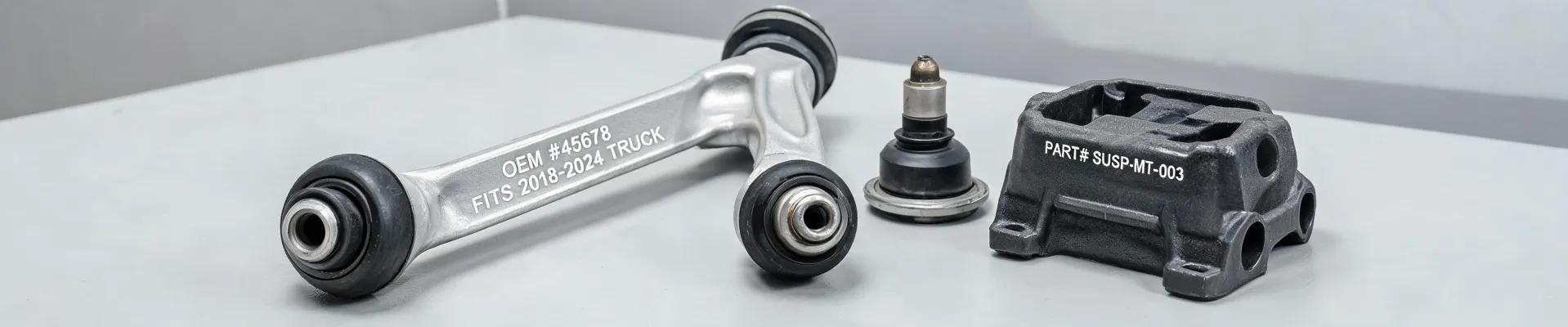
The parts arrived. The bushing on the control arm was off by 0.3 mm. Not huge, but enough that it wouldn't seat properly. The vendor? They blamed our specs, then said they could rework it for another $800—but we'd lose two days. We didn't have two days. So we paid the extra, and the client was (barely) happy. But that $800 in "unexpected" costs wiped out the margin on that order.
The transparent vendor I work with now? They have a three-stage inspection process. They tell you about the risk before you place the order. They don't say "it's fine" and then charge you for fixing it. In my experience, that upfront honesty is worth more than a 10% discount.
Why Quality Guarantees Matter More Than a Lower Quote
Look, I'm not saying budget options are always bad. I'm saying they're riskier. When you're dealing with automotive metal parts—where a 0.2 mm error means a recall—the cost of failure is way higher than the premium you pay for a trusted partner.
The numbers might say Vendor B is 15% cheaper. But if their quality isn't consistent, that "savings" evaporates the first time you need a rework. My gut has learned to trust the vendor who shows their process, not just their price.
Dimension 3: Relationship vs. Transaction – The $50K Lesson
Every spreadsheet analysis pointed to the low-cost option for a large forging project. Something felt off about their responsiveness—they took three days to reply to a simple question about material specs. But the numbers said "go with them." Wouldn't you know it? That "slow to reply" was a preview of "slow to deliver."
Our company lost a $50,000 contract in 2022 because we tried to save $6,000 by going with a discount vendor instead of the partner we'd built trust with over five years. The discount vendor couldn't handle a last-minute spec change. The client walked. That's when we implemented our "trust before transaction" policy.
The question isn't whether the cheap vendor can save you money today. It's whether they can save you money over the life of the project. And from what I've seen, the answer is almost always no.
So, What's the Right Call?
Here's the honest answer—it depends on what you're buying and how much risk you can stomach.
When to Go with the Low-Bid Vendor
- You're ordering a commodity part with very tight specs and multiple suppliers
- You have ample lead time (at least 2x the quoted turnaround)
- You have capacity to inspect every piece upon arrival
- Failure is low-cost—worse case is a few hundred dollars, not a production halt
When to Go with the Transparent Partner
- You need rush delivery or custom tooling
- Quality is critical (e.g., safety-critical parts like suspension components)
- You can't afford a delay—every hour costs real money
- You want to build a relationship that pays off over multiple orders
In my experience, the vendors who list all fees upfront—even if the total looks higher—cost less in the end. They've earned my trust by being clear about what I'm getting. And trust, in automotive procurement, is cheaper than any discount.

Elise Novak
Elise Novak is an automotive braking systems analyst specializing in brake pads, discs, rotors, calipers, shoes, drums, hoses, and complete brake kits. She uses UN Regulation 90 requirements and ISO 26867 dynamometer methods to examine friction stability, fade and recovery, wear, disc thickness variation, runout, and hydraulic integrity. Her work helps distributors, quality teams, and fleet buyers compare replacement parts, verify application suitability, and define incoming-inspection criteria.
Leave a sourcing comment