
-
The Cost Dimension: Prevention Costs $1. Emergencies Cost $3 to $8.
-
The Quality Dimension: Verification is a Process, Not an Attitude
-
The Time Dimension: Metallurgy Doesn't Care About Your Deadline
-
The Risk Dimension: Quick Fixes Have a Way of Becoming Future Failures
-
So What Should You Actually Do?
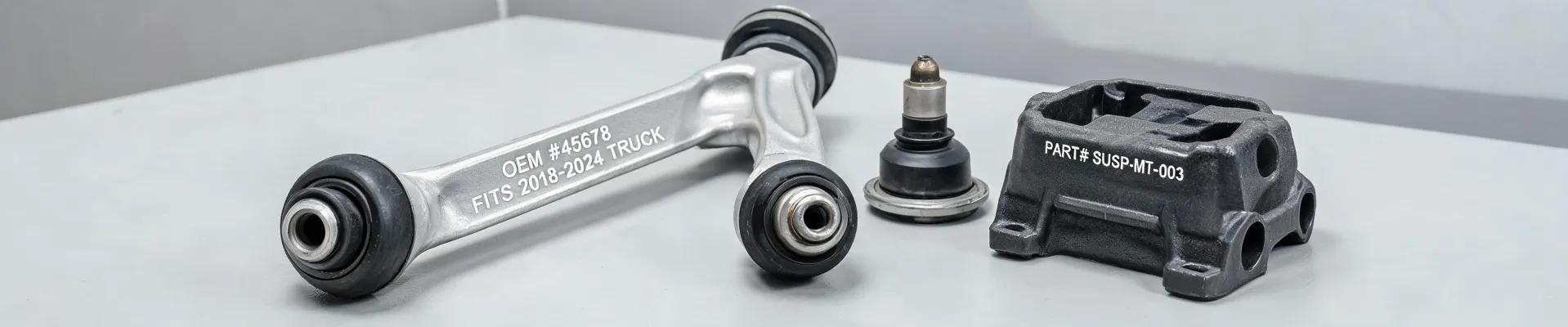
I coordinate emergency production at bilstein, an automotive metal parts manufacturer specializing in stamping, CNC machining, forging, and aluminum extrusions.
In the last 12 months alone, I've processed 214 rush orders. They've come from OEM assembly lines that stopped mid-shift, aftermarket shops with deadline-constrained builds, and a few genuine crises where someone's relationship with a key customer hung in the balance. And honestly? I'd say 85% of those emergencies were avoidable. Most existed because a planning gap got overlooked until the last minute.
Here's the thing though. A rush order isn't just a normal order with a tighter deadline. It's a fundamentally different transaction — different cost structure, different quality risk, different time physics, different failure modes. I've lived both sides often enough to draw a clear comparison.
So let's set the frame: we're comparing prevention-driven production planning — you anticipate your metal part needs, validate specs, and place orders with realistic lead times — against emergency reaction procurement — you discover a need, call suppliers, and accept whatever terms get you a part quickest. Both are legitimate in context. But they are not equal.
The Cost Dimension: Prevention Costs $1. Emergencies Cost $3 to $8.
The most obvious difference is cost. I'm not just talking about the rush premium — typically 50-150% above standard line rates in our industry. I'm talking about total transaction cost.
Take connecting rod hones. A connecting rod hone is a precision machining step that ensures the rod bore is round, straight, and at the exact diameter to maintain proper oil clearance around the rod bearing. If you're rebuilding an engine, this is standard planned machine shop work — around $200-$400 per rod and a 4-5 day turnaround.
In March 2024, a client called at 3:47 PM on a Thursday. They had a classic car engine disassembled on a stand, a customer expecting delivery on Monday, and six connecting rods that needed honing. Our normal turnaround: 4 days. They had 36 hours. We put the rods on a CNC honing machine that night, measured, honed, cleaned, measured again, and delivered early Monday. The cost? $1,400 per rod, plus $320 in emergency freight, plus about $500 in weekend labor premiums. Total: roughly $8,000 above the standard $1,200 job.
We did it. The deadline was met. But that $8,000 didn't buy speed. It bought a delay in resolving a six-week planning gap. The client could have ordered the hone the minute they accepted the engine project. They didn't.
The price of a rush order is rarely the problem. The problem is that you usually discover the emergency because something already went wrong — and going wrong is expensive.
The Quality Dimension: Verification is a Process, Not an Attitude
Here's where the difference between planned and rush really grows teeth: quality verification. When you plan, you have time to validate. When you rush, you skip steps and hope.
In my role, brand confusion is almost a weekly occurrence. We're bilstein — an automotive stamping, forging, and CNC-machined parts manufacturer. There's also Bilstein GmbH, the German suspension company that makes shock absorbers, and febi bilstein, which supplies aftermarket replacement parts including control arms. Three separate entities with similar names. It's a coincidence that has caused many a cross-order mixup.
For example: a client once ordered what they thought was a febi bilstein control arm for a European sedan. They'd cross-checked part numbers on a phone, in a parking lot, mid-panic. The part arrived and was structurally wrong for the vehicle — not because febi bilstein makes a bad control arm, but because the application had a bushing variant that wasn't visible in a photo. We shipped the correct stamped and welded assembly two days later via overnight freight. The total additional cost exceeded the original part price three times over.
The surprise wasn't the part discrepancy. It was that the client's purchasing process didn't include a basic spec review. They could have asked us — the manufacturer — to verify the drawing against the application. But that requires time, documentation, and a shared vocabulary.
And the bilstein Jeep Wrangler rear shock absorber confusion? I've genuinely received calls from people asking if we make shocks for a Wrangler. That's Bilstein GmbH. We make structural metal parts that mount around the suspension system. In a rush, the last thing anyone does is clarify what they're actually buying. Ten minutes of verification — a drawing PDF, one email to an engineer — would have prevented a misdirected panic order.
The conclusion on quality is clear: rush orders push you toward "good enough" specifications; planned orders give you time to clarify, confirm, and improve the spec. In precision metal components, spec clarity isn't a nice-to-have. It's the entire product.
Under IATF 16949 — the global automotive quality standard — new part production requires PPAP documentation, typically Level 3: full dimensional report, material certs, process capability study. That process exists precisely to catch mistakes before parts go into vehicles. It takes time. Which is exactly why last-minute ordering is fundamentally incompatible with proper quality assurance.
The Time Dimension: Metallurgy Doesn't Care About Your Deadline
A question that surfaces during urgent calls: what is a timing chain? I'll answer plainly. A timing chain is a metal chain that keeps the crankshaft and camshaft synchronized inside an engine. It's designed to last the engine's lifetime under proper maintenance. And it's a precision component — manufacturing a replacement timing chain involves multi-step heat treatment, surface finishing, and fatigue testing. It's not a stamp-and-ship operation.
In our industry, some processes have hard floor times. A stamping press can punch out 60 parts per minute. But a forged part needs to cool at a specified rate. An aluminum extrusion has to be heated to roughly 500°C, forced through a die, quenched, artificially aged, stretched, cut, and dimensionally inspected. Heat treatment for automotive-grade alloy steel can run 12-24 hours at temperature. These aren't inefficiencies. They're metallurgical requirements. You can't temper steel in 4 hours
One client asked for an emergency extrusion order on Thursday afternoon and demanded delivery Friday morning. They assumed extrusion was like drawing wire. When we explained the process — billet preheat, extrusion through the die, quench, age, stretch, straighten, cut, inspect — they went quiet. We delivered in 4 days, which required pulling real favors from the production team, and the cost reflected that. Their previous planned orders had been routine, cost-effective, and actually faster, because we could schedule material in advance.
The point is simpler than the engineering. Time depends on physics and available capacity, not on your urgency. Prevention gives physics the time it needs. Emergencies fight physics.
The Risk Dimension: Quick Fixes Have a Way of Becoming Future Failures
Let's talk about a familiar little bottle. Blue Devil radiator flush is a legitimate maintenance product. Used as directed — flushing old coolant, cleaning sediment, refilling with fresh coolant — it's fine. That's prevention.
But I've seen the "cure" mindset try to solve an overheating engine with a flush product. The logic: the car overheats, the cooling system has an issue, let's flush it and see. Then the car still overheats, because the water pump is leaking, or the radiator is clogged beyond what a chemical flush can resolve. The flush wasn't the fix. It was a wish.
In metal parts, the equivalent is ordering the cheapest, fastest part without verifying that the material grade suits high-temperature, corrosive environments. The part arrives. It fits. It works. For eight months. Then it cracks. The rework always costs more than the difference between the $1.10 part and the $1.75 part.
Here's where I might surprise you. Emergencies sometimes work out. In summer 2024, a stamping client had a production line down on a Monday morning. We reverse-engineered a current-production part from their drawings, made a new progressive die, delivered blanks by Wednesday, and kept them out of a $50,000 penalty clause.
But the postmortem was painful: the line went down because a preventive maintenance interval had been postponed — twice. The emergency was a bill for skipping prevention. We still service that client's normal orders today. But if they'd kept the maintenance schedule, the die would have arrived a week earlier, at standard cost, without a single rushed phone call.
So What Should You Actually Do?
Prevention over cure doesn't mean emergencies are moral failures. It means they should be exceptional, not routine — and when they do happen, they should be treated with the seriousness they deserve: escalated, budgeted, and executed with eyes open to risk.
- 6+ weeks before need: You're in the planning zone. Send the drawing, request PPAP documentation, book the order at standard rates. It'll arrive on time.
- 2-6 weeks: You're in the expediting zone. Call immediately. We can pull material and coordinate across stamping, CNC, and forging. The premium is moderate. Hold your specs.
- Less than 2 weeks: You're in the emergency zone. Expect a significant premium, compressed quality windows, and high freight costs. Get everything in writing.
- Under 3 days: Call, but be ready for a "no." If we say yes, it's because we already have material stock and in-house tooling. Don't assume every supplier can do this.
And when the dust settles, write down what caused the emergency. After the third identical rush order from the same client in one year, I now say it directly: "You're paying 3x to solve a planning problem that prevention would solve for 1x." Some clients get offended. Most get the point.
Honestly, I'm not sure why some operations chronically run in emergency mode. My best guess: immediate operational pressure always feels more urgent than future maintenance. The phone only rings when the line is down.
So this isn't an argument against emergency support. It's an argument against making emergencies the default. We're here for the 2 AM call. But if you're calling every week at 2 AM, the problem isn't the parts. It's the system.

Elise Novak
Elise Novak is an automotive braking systems analyst specializing in brake pads, discs, rotors, calipers, shoes, drums, hoses, and complete brake kits. She uses UN Regulation 90 requirements and ISO 26867 dynamometer methods to examine friction stability, fade and recovery, wear, disc thickness variation, runout, and hydraulic integrity. Her work helps distributors, quality teams, and fleet buyers compare replacement parts, verify application suitability, and define incoming-inspection criteria.
Leave a sourcing comment